

What is egg freezing?
Egg freezing is a method of preserving a woman’s fertility so she can try and have children later. As you age, the quality of your eggs declines, but when your eggs are frozen, their age is ‘frozen in time.’
Egg freezing involves all the steps of an IVF cycle up to and including egg collection. Eggs are then frozen by a method called vitrification. When the eggs are required they will be thawed, and you resume the second half of an IVF cycle: adding sperm to the eggs, embryo transfer, and freezing any spare embryos.
Who freezes their eggs?
- women aged from mid 20's through to early 40's
- those who have not met the right person just yet
- those who are not quite ready and want to focus on their careers
- those who are undergoing treatments that can impact their fertility like cancer treatment, gender affirming hormone therapy (GAHT), or other surgery
- those who discover they have low egg reserves but are not ready for pregnancy yet.
We have egg freezing packages that include medication - so you know what the price is before you start. Check out our fees page here.
How do I know if I should freeze my eggs?
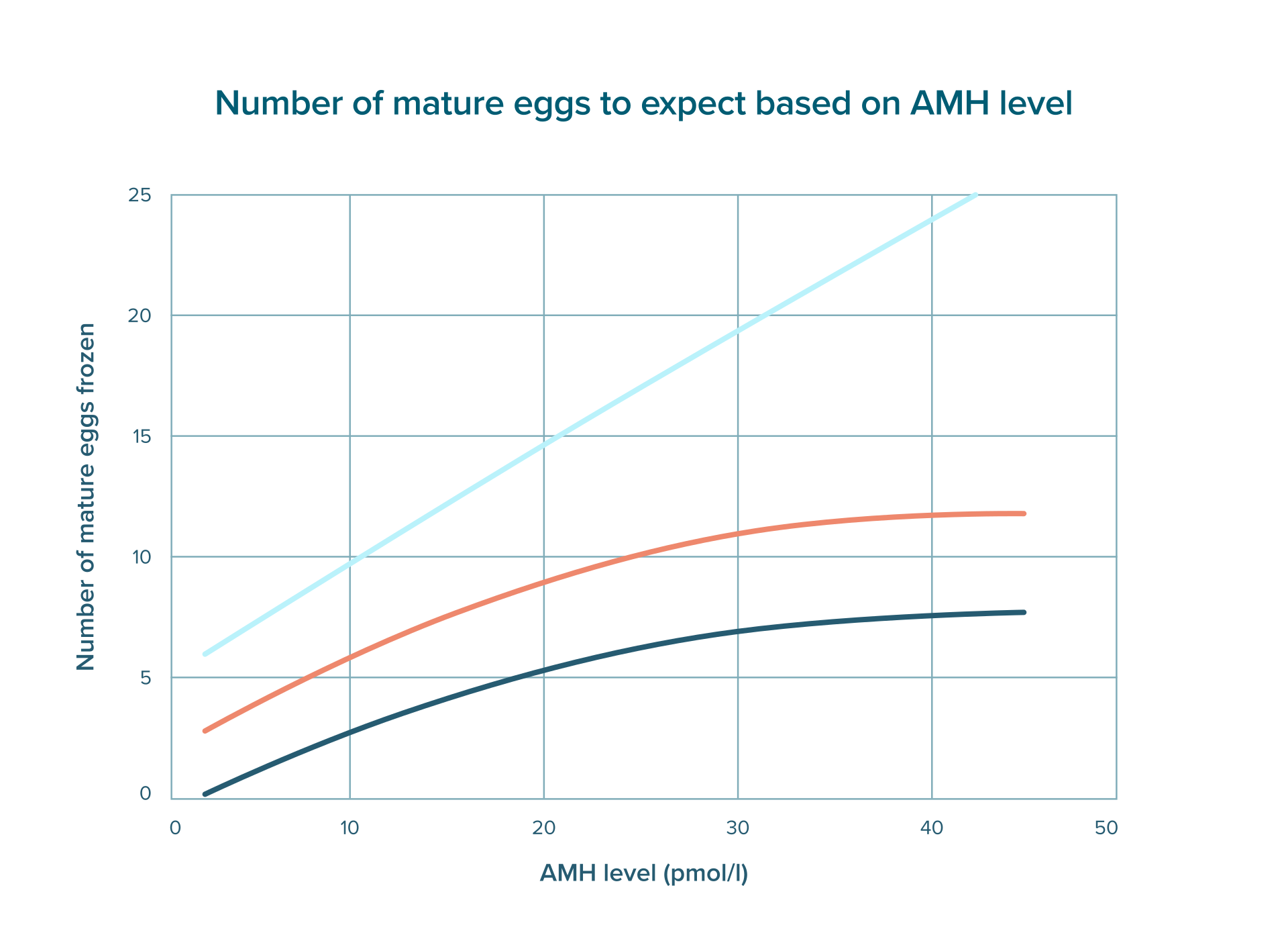
Your doctor will probably want to start the process with an AMH (Anti-Müllerian Hormone) test, a simple blood test which gives an indication of the quantity of eggs a woman has relative to others for her age.
The AMH test is currently regarded as the best method to estimate ovarian reserve. It helps us to understand the number of eggs we might retrieve and the drug doses we need during an IVF cycle. It can also identify women who may experience early menopause, potentially losing their fertility earlier than average. It is NOT a measure of egg quality. Like most fertility tests, an AMH test doesn’t provide a definitive answer. Your AMH result is plotted on a graph that shows a scale from normal to low, like the one below called 'Number of eggs to expect based on AMH level'.
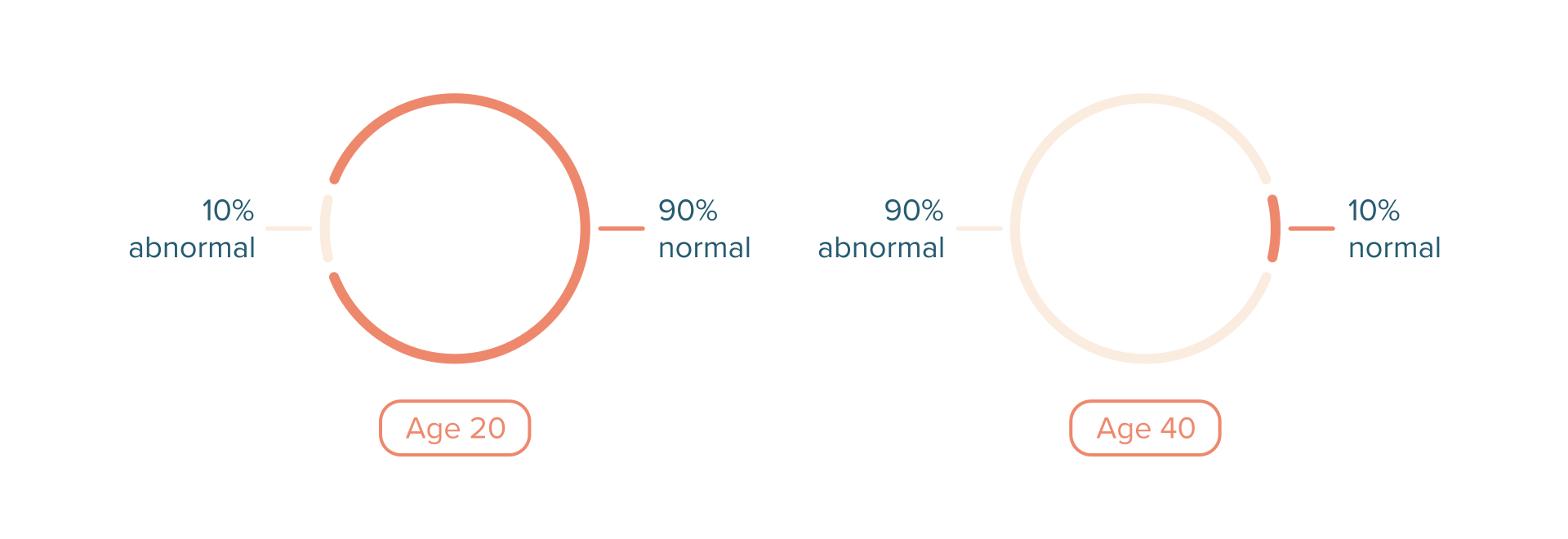
The number of eggs frozen differs for each individual and is determined by the number of viable eggs produced during ovarian stimulation. Some may need just one cycle, while others might require multiple, depending on factors such as ovarian reserve, the body’s response to stimulation, as well as maternal age and egg quality.
You can use the graph below to see how many eggs you might expect based on your AMH level. The graph on page 4 shows the chance of having a baby for a given number of frozen eggs.
For example:
If you’re 32 and freeze 10 eggs, your chance of having a baby is about 60%.
If you freeze another 10 eggs, your chance increases to about 80%.
This means that many women may need to plan for more than one egg retrieval, especially if they hope to have more than one child. It’s important to freeze more eggs than you need because not all eggs survive the thawing process; and of those that do, not all will fertilise and develop into embryos.
Egg freezing: all you need to know
What happens when I freeze my eggs?
When the eggs are to be used at a later date, they will be thawed. When you are ready, you then resume the second half of the IVF cycle: adding sperm to the eggs, embryo transfer, and freezing any spare embryos.
Note that even in younger age groups, (under 37 years), it's important to understand that not all eggs may survive the freezing and thawing process. Additionally, some thawed mature eggs might not fertilize or develop into the blastocyst stage. Moreover, not all transferred embryos may lead to pregnancy. Rest assured, our team is dedicated to providing the best care and support to optimize your chances for a successful outcome.
Here, we take you through some options so you can find out what might be right for you...
When is the right time?
The right time to try to have a baby depends on your unique circumstances - it's an incredibly personal decision. You may be single, with a partner, or in a LGBTQI+ relationship. If you're not in a position to try for a baby now, egg freezing may be an option to help preserve your fertility.
It's easy to take the first step
To get started, we recommend you make an appointment to talk with a fertility specialist. At this consultation, the specialist will explain options and help you form an initial plan. He or she will also arrange some initial screening tests to assess your fertility.
We want you to feel confident that the cost won’t unexpectedly exceed your budget, so we offer an all-inclusive price for an egg-freezing cycle that includes all medication. We provide a multi-cycle plan discount, in case you need a second or third cycle to boost the number of eggs you have stored.
To know more check our Egg freezing brochure and Egg freezing fees. If you'd like an informal chat to explore your options, book a free, no obligation chat with one of our experienced fertility nurses.
We have egg freezing packages that include medication - so you know what the price is before you start. Check out our fees page here.
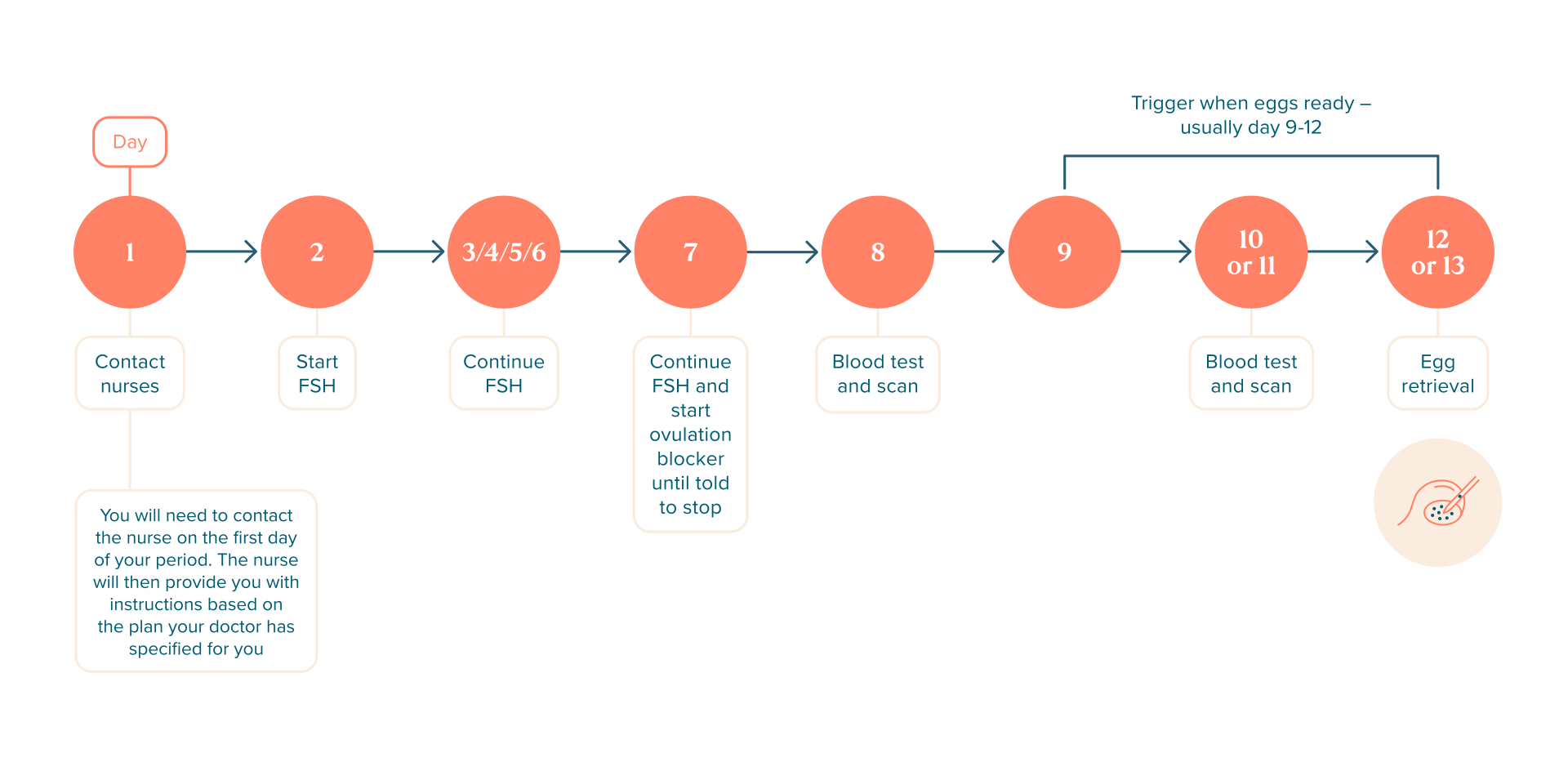
Typical timeline for egg freezing
Egg freezing FAQs
When is the right time?
The right time to try to have a baby depends on your unique circumstances. It's an incredibly personal decision. You may be single, married, or in a LGBTQI+ relationship. If you're not in a position to try for a baby now, egg freezing may be an option to help preserve your fertility.
Are there any legal implications of egg freezing?
The Human Assisted Reproductive Technology (HART) Act limits storage of sperm, eggs or embryos to a maximum of ten years initially. The clinic can help you apply to the ethics committee if you want to extend storage before you reach the ten year limit. You can’t use sperm, eggs or embryos after a person’s death unless the person has made it clear in their consent form they want this to happen. You can choose to leave sperm or eggs to your partner for them to use, your partner can’t donate them to another person.
Are there any risks?
Frozen sperm and embryos are stored in thin plastic straws immersed in liquid nitrogen.
Cross-contamination of straws by viruses such as Hepatitis or HIV is a theoretical risk although it has never been reported. As a precaution we store sperm for men positive to Hepatitis B or C or to HIV in a separate bank. There is a very small risk that a liquid nitrogen bank will fail, causing the sperm, eggs or embryos stored in it to perish. Bank failure has been reported occasionally around the world. Straws containing sperm, eggs or embryos may be handled while stored for various reasons, such as when retiring a bank or moving samples to a different bank location.
There is a very small risk that handling could sometimes reduce the viability of frozen samples despite the care taken. Loss of samples during handling and moving has also been reported. We take reasonable precautions but cannot be held responsible for the loss of sperm, eggs or embryos from bank failure.
What are the chances of conception using stored sperm, eggs or embryos?
If you have frozen sperm, the type of treatment to use depends on the number and quality of the sperm stored. IVF and IUI pregnancy rates are the same using frozen sperm and fresh sperm. If you have embryos frozen, the chance of pregnancy is similar to that from using fresh embryos. About 95% of embryos survive freezing and thawing. Eggs are more prone to damage from freezing and thawing than embryos, and there is more variation in egg survival between individual women than there is for embryo survival.
For some women 90% or more of their eggs survive, while for others the rate may be closer to 50-70%. It may be 0% in very rare cases.
If an egg survives most people have normal embryo development but for a few embryos development may be poor. Unfortunately, there is no way to predict this. The most important factors influencing the chance of having a child is your age when the eggs were frozen and the number of eggs or embryos available. Fertility Associates has a discounted fee for women who want to do a second or third egg freezing cycle.